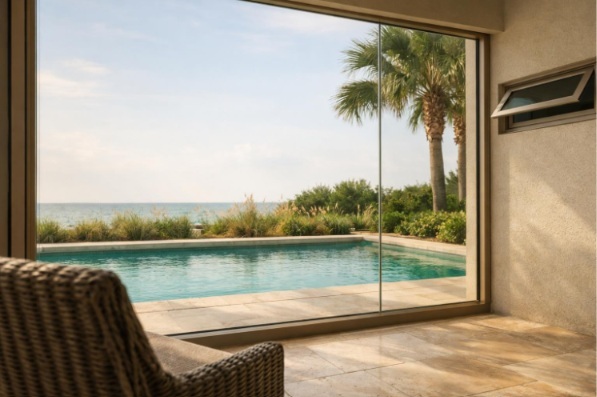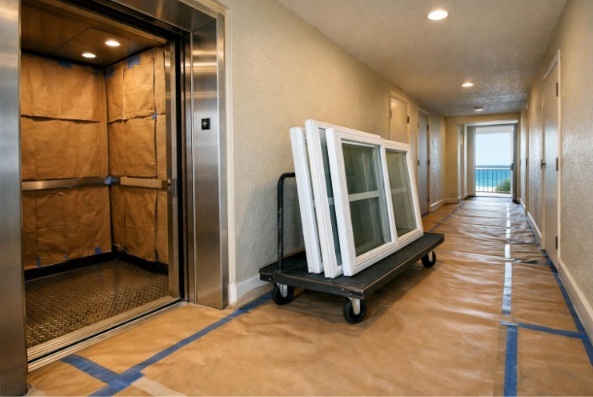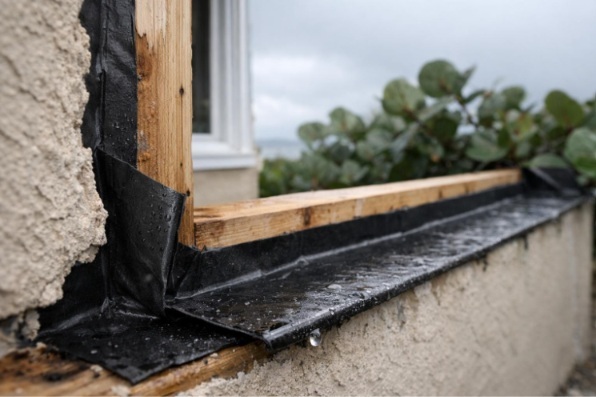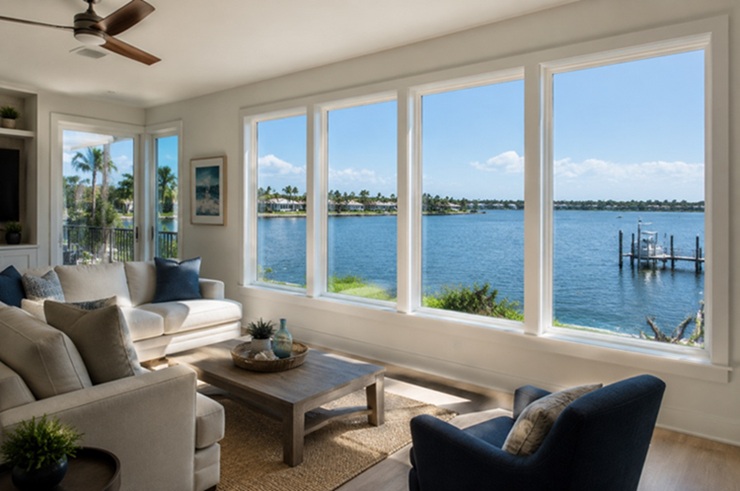
For homeowners considering window replacement in Bradenton, FL, waterfront views are often one of the property’s biggest assets. Large glass openings bring in natural light, open up the home visually, and connect indoor living spaces to the outdoors. But homes near the water also place far greater demands on windows than many homeowners expect.
Salt air, direct sun exposure, humidity, wind pressure, and glare all work against standard window systems over time. Choosing replacement windows for a waterfront property is not just about appearance. The wrong glass package or frame material can create comfort problems, rising cooling costs, corrosion issues, and shortened window lifespan long before homeowners realize what is happening.
Why Large Water Views Create More Heat and Glare Problems
Water reflects sunlight aggressively. Homes facing bays, canals, or open water often receive sunlight from multiple angles throughout the day, especially in the afternoon.
That reflected light increases both glare and solar heat gain inside the home.
We regularly walk into waterfront homes where living rooms become difficult to use by late afternoon because sunlight bounces off the water directly into the glass. Many homeowners initially try to solve the issue with blinds or dark tint, but those solutions often block the very view they invested in.
The better approach is selecting high-performance glass designed specifically for Florida conditions.
Low-E coatings help reduce infrared heat while preserving visible light. That balance matters because homeowners want to maintain clear water views without turning rooms into hot zones during peak summer months.
One commonly overlooked issue is floor fading. Reflected UV exposure from waterfront environments can accelerate fading on hardwood flooring, furniture fabrics, and cabinetry finishes faster than inland homes.
Why Frame Material Matters More Near Saltwater
Glass usually gets the attention first, but frame durability becomes equally important near the coast.
Salt air slowly breaks down lower-quality materials over time. We often see older aluminum frames developing corrosion around corners, tracks, and fasteners years before homeowners notice major operational problems.
That corrosion can eventually affect:
- Window operation
- Lock performance
- Structural stability
- Water resistance
Vinyl and advanced impact-rated frame systems tend to perform better long-term in coastal conditions because they resist moisture and salt exposure more effectively.
One non-obvious problem is hardware deterioration hidden inside moving components. Sliding windows and doors near the water frequently experience roller and track wear faster than expected because salt particles settle into the hardware continuously.
That is why coastal installations should prioritize marine-grade components whenever possible.
How Bigger Glass Openings Affect Structural Performance
Homes with panoramic water views often use oversized windows, picture windows, and large sliding glass systems. While these designs maximize visibility, they also increase structural demands on the window assembly itself.
Larger openings experience greater pressure during storms and high-wind events. That becomes especially important in Florida coastal regions where impact protection matters year-round, not just during hurricane season.
Many homeowners focus only on the glass rating without considering frame reinforcement. But large glass systems require balanced engineering across:
- Glass thickness
- Frame strength
- Anchoring methods
- Installation precision
We sometimes inspect waterfront homes where attractive oversized windows were installed years ago without proper reinforcement. Over time, slight frame movement created seal failure, water intrusion, and difficult operation.
The view stayed beautiful. The performance did not.
Why Thin Glass Can Make Waterfront Homes Uncomfortably Loud
Waterfront living often sounds peaceful in theory, but exterior noise becomes a real issue depending on location.
Boat traffic, wind, nearby roads, construction, and even wave reflection can create more sound transfer than homeowners anticipate. Standard glass allows much of that noise to enter the home directly.
Impact-rated laminated glass helps significantly reduce sound transmission because the interlayer dampens vibration between panes.
Many homeowners are surprised that their biggest improvement after installation is not storm protection or efficiency. It is quietness.
One homeowner described the difference as finally being able to hear conversations indoors without competing against exterior wind noise every evening. That type of comfort improvement rarely shows up in brochures, but it matters daily.
Why Proper Window Orientation Changes Glass Recommendations
Not every side of the house experiences sunlight equally.
South- and west-facing windows near open water typically experience the highest heat load because they receive prolonged direct and reflected sunlight throughout the day. East-facing windows often create more glare during morning hours, while shaded northern exposures may need entirely different glass considerations.
This is why high-quality window planning should never apply the exact same glass package across every opening automatically.
Different elevations may require different performance priorities based on:
- Solar exposure
- View importance
- Privacy concerns
- Ventilation needs
- Wind direction
That level of customization becomes especially important in luxury waterfront homes where oversized openings dominate the architecture.
Are Impact Windows Necessary for Waterfront Homes?
In most Florida coastal environments, impact-rated windows are strongly recommended even outside mandatory code zones.
Storm debris is only part of the equation. Waterfront homes also experience sustained wind pressure, airborne salt exposure, and sudden weather shifts that place continuous stress on glass and frames.
Impact windows provide additional benefits beyond hurricane protection, including improved noise reduction, stronger security, and better UV resistance. Many homeowners initially focus on storm safety but later realize the year-round comfort improvements become equally valuable.
Can You Reduce Glare Without Losing the Water View?
Yes, but the solution depends heavily on the glass technology selected.
A very dark tint often reduces visibility from inside the home and can make interiors feel closed off. Modern Low-E coatings are usually a better long-term solution because they reduce glare and heat transfer while preserving natural light and visibility.
Some waterfront homeowners also benefit from spectrally selective glass, which more aggressively blocks infrared heat while maintaining a brighter indoor appearance. That is useful in homes with extensive west-facing water exposure, where afternoon glare is difficult to manage.
How Long Do Coastal Windows Typically Last?
Coastal lifespan depends heavily on product quality, exposure level, and installation quality. Homes directly on the water generally experience faster wear than inland properties because salt exposure affects hardware, seals, and moving components continuously.
Well-built impact-rated systems with proper maintenance can still perform for decades, but lower-grade products often show corrosion or seal issues much earlier. Regular inspection becomes especially important for waterfront homes because small problems can spread quickly when moisture and salt are involved.
Waterfront Windows Should Protect the View, Not Compete With It
The best replacement windows disappear into the experience of the home itself. They should frame the water clearly, reduce heat and glare naturally, and withstand coastal conditions without constant maintenance concerns. For homeowners planning window replacement in Bradenton, FL, choosing windows designed specifically for waterfront exposure often prevents years of comfort, efficiency, and corrosion-related problems later on. At Clearview Windows and Doors, we believe the right window system should protect both the home and the reason homeowners chose waterfront living in the first place.