Key Takeaways
- Casement windows can help catch and direct passing breezes into a room.
- Their ventilation advantage depends on opening direction and the home’s layout.
- Rooms with moisture, odors, or limited airflow deserve priority when choosing operable windows.
- Cross-ventilation requires openings that work together, not simply more open windows.
- Screens, walkways, shading, and nearby obstructions affect whether a casement window is practical.
Florida Airflow Conditions
Casement windows can improve natural airflow because their outward-opening sash can help guide a breeze toward the opening instead of merely leaving a gap in the wall. For homeowners considering window replacement Bradenton, FL, that difference matters when a room feels close, damp, or slow to clear after daily use.
Florida homes deal with heat and humidity, but outdoor air is not useful at every hour or in every condition. Opening a window may bring in a welcome breeze, or it may bring in warmer, wetter air. The goal is not to keep every window open. It is to create controllable airflow when outside conditions are comfortable enough to use it.
Window style affects how that airflow enters the room. A window that opens only partly may provide adequate ventilation in one location but disappoint in a room blocked by a fence, porch enclosure, dense landscaping, or a neighboring wall. Intentional operation and placement matter more than assuming every open window performs the same.
How Do Casement Windows Direct Breezes?
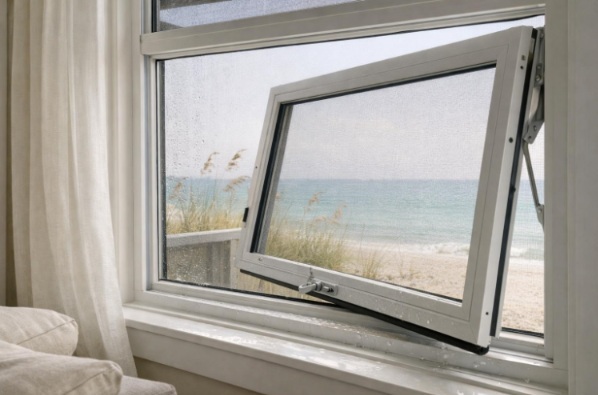
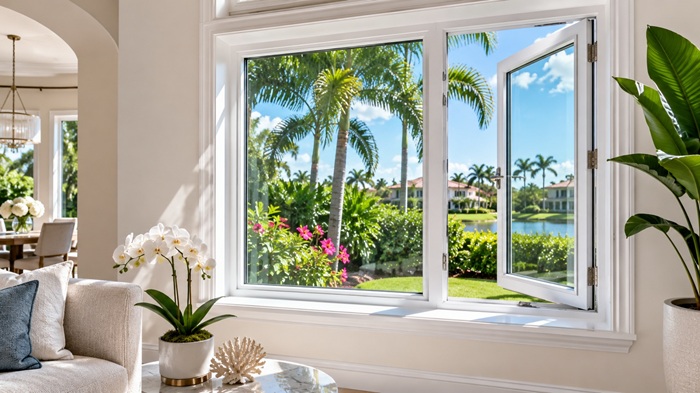
Casement windows can direct breezes because the sash is hinged along one vertical side and swings outward. When opened toward a passing breeze, the glass panel can act somewhat like a scoop, helping steer moving air toward the opening.
A casement window does not create wind where none exists. Its benefit comes from making better use of air already moving along the outside of the home. The direction of the hinge, the angle of the open sash, and the window’s exposure all influence the result.
Casement windows also usually provide a relatively open path through the frame when the sash is fully opened. That can be useful in a room where a small opening feels insufficient, such as a kitchen that holds onto cooking moisture or a bathroom that needs help clearing damp air after bathing.
The opposite can also happen. If the sash opens away from the passing breeze, the window may not capture air as effectively. A sash that swings into a narrow side yard, over a walkway, or toward a screen enclosure may also be impractical to use fully. The window must work in its real position, not just look good on a product display.
For homes that are unoccupied for part of the year, ventilation planning should also remain separate from storm protection planning. Read more about impact window protection for seasonal homes when considering the full role replacement windows play.
Ventilation Advantages by Window Type
The following comparison shows why a casement window may be the stronger ventilation choice in some rooms, but not every room.
| Window Type | Opening Area | Breeze Capture | Placement Flexibility | Daily Operation |
|---|---|---|---|---|
| Casement | Broad clear opening | Can guide passing air | Depends on sash swing | Crank-operated |
| Double-Hung | Partial opening at each sash | Relies on direct airflow | Fits many wall locations | Lift upper or lower sash |
| Sliding | One side opens | Limited breeze direction | Useful in wider openings | Slide sash sideways |
| Fixed | No opening | No ventilation | View and light focused | No operation |
Casement windows are not automatically better in every location. A double-hung window may suit an area where an outward-opening sash would interfere with a path. A sliding window may make more sense for a broad opening where clearance outside is limited. Fixed windows remain useful where light and views matter more than operable ventilation.
The right choice comes from matching the window to the room’s job. Window appearance still matters, and homeowners comparing grille patterns and style choices can also explore architectural windows bradenton fl.
Which Rooms Benefit Most?
Casement windows are most useful where a room needs a meaningful path for fresh air, not just a small opening. Work through each room based on how it is used and what happens when air sits still.
- Start with bathrooms. Bathing adds moisture to indoor air. An operable window can support ventilation when conditions allow, especially in a bathroom that feels damp after use. If moisture lingers repeatedly, it can contribute to peeling finishes, musty odors, and material deterioration over time.
- Evaluate the kitchen. Cooking releases heat, steam, and odors. A well-placed casement window can help move air out or bring replacement air in, depending on where other openings are located. It should support, not replace, proper kitchen exhaust.
- Check bedrooms with poor cross-breezes. A bedroom with only one usable exterior opening may feel stagnant even when the window is open. A casement window may improve the incoming-air side of the room, but another outlet path is still needed for effective circulation.
- Look at laundry and utility spaces. These rooms may collect warmth and moisture from normal household activity. Their location often makes them overlooked during a replacement project, even though an operable window can make the space more manageable.
- Consider enclosed sitting areas. Rooms with exterior walls on more than one side may have good potential for controlled airflow. The key is whether openings are on different exposures and can work together.
Prioritizing the problem rooms first can help you make better decisions if you are replacing windows in stages.
Cross-Ventilation Window Placement
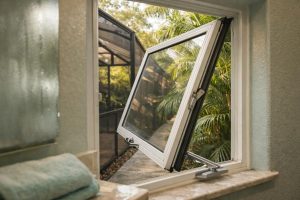
Cross-ventilation means air enters through one opening and exits through another. Casement windows can strengthen the incoming-air side of that pattern, but they cannot deliver effective whole-room airflow by themselves if air has nowhere to go.
For a room to ventilate well, there needs to be a path across the space. That could mean an operable window on an opposite wall, another opening in an adjacent room, or an interior pathway that is normally left open. Closed bedroom doors, narrow halls, and rooms arranged in a straight line can interrupt the path.
Exterior conditions matter too. A casement window facing a wall, covered lanai, tall hedge, or tightly parked vehicle may receive less moving air than the same window on an open side of the home. Before selecting hinge direction, consider where breezes are likely to travel and whether the open sash will catch them or block the opening.
Placement must remain practical. A casement sash should not swing where it creates a conflict with a walkway, outdoor seating area, gate, or service route. Screens are also important because a window is only useful for everyday ventilation if you can leave it open without inviting insects inside.
Casement windows work best when the room has a clear inlet and outlet strategy. In a kitchen, for example, a casement window near the cooking area may help draw in air while another opening across the room allows warm, humid air to move out. Without that second path, air may simply swirl near the opening instead of refreshing the full space.
A professional assessment of the opening, wall condition, surrounding clearance, and operation plan is valuable before ordering. Explore replacement windows and doors as part of a whole-home approach rather than choosing each opening in isolation.
What Should Bradenton Homeowners Discuss Before Replacing Windows?
Homeowners should discuss how each room needs to function before settling on casement windows. The style is highly useful in the right location, but the decision should include the whole opening and the space around it.
Bring these points to the conversation:
- Which rooms feel stale, humid, or slow to clear after cooking or bathing?
- Which direction should each sash open to make the best use of passing air?
- Will an open sash conflict with a walkway, patio, landscaping, or outdoor equipment?
- Will the window need an easy-to-use screen for regular ventilation?
- Does nearby shade, glazing choice, or exterior exposure affect comfort when the window is closed?
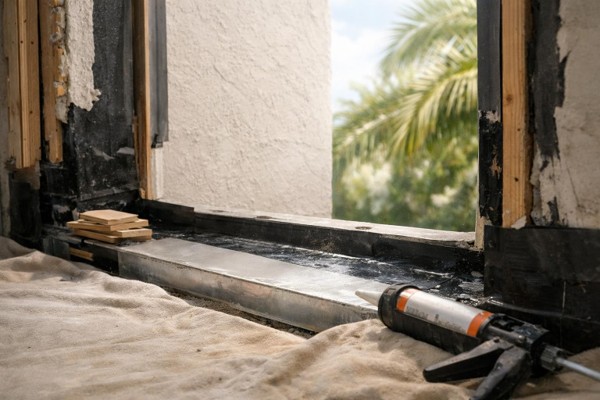
- Are there signs of moisture at the existing opening that should be evaluated before replacement?
- How will the selected window work with other operable windows in the same room or nearby spaces?
The answers often reveal that different rooms need different window styles. A casement window may be ideal beside a kitchen work area or in a bathroom, while another location may need a different operating style for clearance or access.
If you are still unsure, compare the room’s airflow problem, exterior conditions, opening clearance, and daily use instead of choosing based on style alone. A thoughtful window replacement Bradenton, FL plan weighs ventilation with safety, shading, screens, and how the window will actually be used. Talk with our team at Clearview Windows & Doors Inc, or call (941) 746-9848 to discuss the options for your home.