Key Takeaways
- Start with your home’s exposure, opening condition, and priorities, not a search result or a single quote.
- Compare the complete window system, including frame, glass, operating style, and supporting documentation.
- Make sure written proposals describe the same removal, sealing, finish, and cleanup scope.
- A lower total can hide omitted preparation work that matters once old units come out.
- Choose a provider that explains the process clearly before installation starts.
Start with the Coastal Conditions Your Windows Need to Address
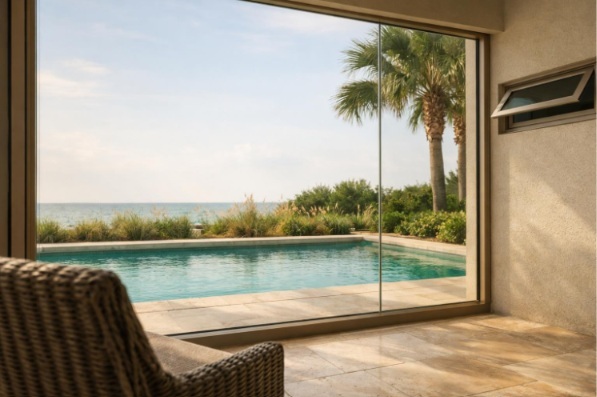
For window replacement in Sarasota, FL, the right comparison begins at your house, not with whichever company appears first online. Coastal homes can face direct wind exposure, wind-driven rain, intense sun, salt-laden air, and wide openings that place different demands on a window system.
Walk around the home before requesting proposals. Note which elevations face open water, where windows are hard to reach, which frames show movement or staining, and whether openings are in stucco, masonry, block, or framed walls. These details affect the recommended unit and the installation approach.
Your priorities matter too. Some homeowners need to replace every opening at once, while others are addressing the most exposed elevations first. A good comparison should show how each proposed system fits the actual opening, not treat every window as interchangeable.
For a broader look at what a full upgrade can change, review these impact window replacement benefits for Sarasota homes.
Compare the Actual Window System, Not Just the “Impact” Label
“Hurricane impact” describes a type of tested protective system. It does not tell you everything about the frame, glass, operation, fit, or finish.
Use this checklist when discussing product options:
- Frame material: Ask whether the frame is vinyl, aluminum, fiberglass, or another material, and why it suits the location. Frame strength, maintenance needs, thermal movement, and available colors can vary.
- Glass configuration: Confirm the proposed glass build-up and whether it is intended for impact resistance, heat control, or both. Glass choices can affect daylight, visible appearance, and solar heat entering the room.
- Operating style: Compare fixed, single-hung, sliding, casement, and other styles based on the opening and intended use. A fixed unit may be suitable where ventilation is not needed, while an operable unit must also seal and function reliably.
- Opening-by-opening fit: Ask whether each window will be selected for its specific size and wall location. A large living-room opening, a narrow bathroom opening, and a bedroom egress opening should not automatically receive the same solution.
- Available options: Review grids, obscure glass, interior and exterior finishes, hardware, screens, and sill details before ordering. These choices are harder to change after the units are made.
- Performance documentation: Request product information that identifies the exact series being quoted. This helps prevent a proposal from using a broad product name without showing what is actually included.
A window can have strong glass and still disappoint if its frame, operation, or installation details are poorly matched to the opening.
Ask What the Installation Proposal Includes From Start to Finish
The visible window is only part of the work. The proposal should explain what happens between removing the old unit and completing the finished opening.
- Measurements before ordering: Confirm that final field measurements are part of the process. Ordering from rough estimates can create fit issues that show up later at the wall opening.
- Removal of existing units: Ask how old frames, glass, fasteners, and surrounding materials will be handled. The removal method affects how much of the existing opening can be inspected.
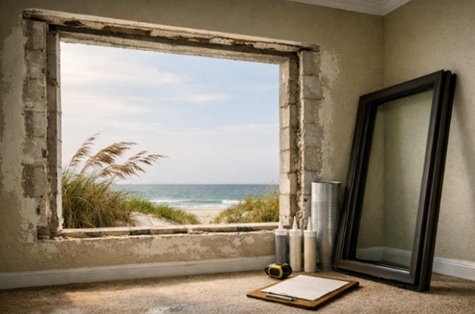
- Opening preparation: The written scope should address what happens if the crew finds deteriorated wood, loose substrate, voids, or an uneven sill. Ignoring these conditions can leave the new window dependent on unstable material.
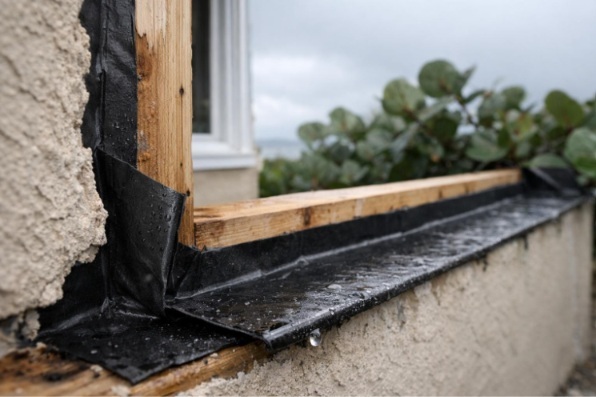
- Sealing and water management: Ask how the installer plans to create a weather-resistant connection between the window and wall. Coastal rain does not need a large gap to enter, especially when wind pushes water against the exterior.
- Interior and exterior finish work: Clarify trim, caulking, stucco touch-up expectations, drywall disturbance, and paint responsibilities. Finish work is a common place where two proposals may look similar but cover very different results.
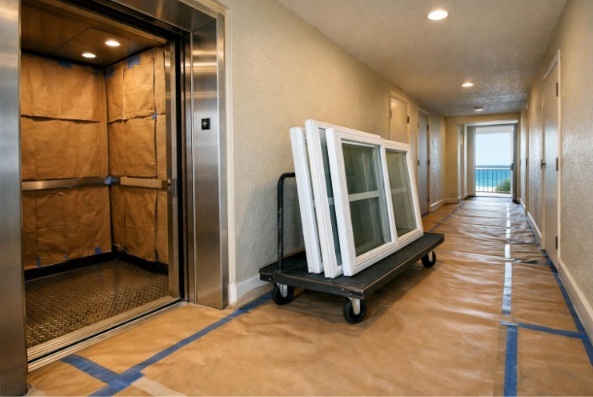
- Cleanup and protection: Confirm how work areas, landscaping, flooring, and furnishings will be protected, along with how old materials will be removed from the property.
If weak sealing or damaged opening material is simply covered over, water can travel behind finishes. The first sign may be staining, swelling trim, or a musty area months later, when correction requires opening work that could have been addressed during replacement.
Review Documentation and Local-Code Coordination
Ask each provider how they handle the project documentation required for your specific location and selected windows. Coastal requirements can vary by site conditions, window size, and the type of opening being replaced.
- Product approvals: The provider should be able to identify documentation tied to the exact product series and configuration being proposed.
- Project paperwork: Ask what documents you will receive before work begins and what records you should keep after completion. Clear paperwork helps you confirm that the installed units match the order.
- Inspection coordination: Confirm who schedules required inspections and how you will be notified if access to the home is needed. This avoids last-minute confusion after the work is underway.
- Changes in the field: Ask what happens if site conditions require a change from the original plan. The answer should be specific enough that you understand how approval and documentation will be handled.
Use Quote Comparisons to Spot Scope Gaps Instead of Chasing One Bottom Line
A useful comparison is not a stack of totals. It is a line-by-line review of what each company is actually proposing.
- Match the window count and locations. List every opening by room or elevation. Check whether each proposal includes the same windows, doors, fixed panels, and screens.
- Match the product description. Compare manufacturer, series, style, frame material, glass option, color, grids, and hardware. “Impact window” alone is not a complete description.
- Match labor scope. Look for removal, opening preparation, sealing, exterior finish work, interior trim, cleanup, and disposal. If one proposal does not mention a step, ask whether it is excluded.
- Read exclusions carefully. Existing hidden damage, trim restoration, paint, wall finishes, and access challenges may be treated differently from one proposal to another.
- Ask about timing and payment terms. Get a clear explanation of ordering, delivery expectations, installation scheduling, and when payments are due. Avoid assuming that a verbal timeline is part of the agreement.
- Understand the change-order process. If unexpected conditions are found, you should know how changes are described and approved before extra work proceeds.
Evaluate Communication and Post-Installation Support Before You Choose
The best time to judge communication is before you commit. If it is difficult to get a straight answer during the proposal stage, it rarely becomes easier once materials are ordered.
- Responsiveness: Notice whether questions about product choices and scope receive specific answers instead of broad assurances.
- On-site oversight: Ask who will be responsible for coordinating the work and addressing issues found during installation.
- Project updates: Find out how schedule changes, delivery updates, and site needs will be communicated.
- Final walkthrough: Confirm that the completed windows will be reviewed with you for operation, locks, screens, finishes, and visible details.
- Care guidance: Request instructions for proper operation and routine upkeep of the new units, including any manufacturer materials provided with the windows.
- Reporting concerns: Ask how to report an issue after installation and what information the provider needs from you to evaluate it.
A careful comparison gives you more than a product choice. It gives you a clearer picture of how the work will be planned, installed, and finished. For an open discussion of window replacement in Sarasota, FL, Clearview Windows & Doors Inc can help you review your options and installation scope. Call (941) 746-9848 to schedule a conversation about your coastal home.
Frequently Asked Questions
Do All Hurricane Impact Windows Perform the Same?
No. Impact-rated systems can differ in frame design, glass configuration, operating style, available sizes, hardware, and finish options. Ask for the exact product series and details for the window proposed in each opening.
What Should Be Included in a Written Window Proposal?
A complete proposal should identify the windows being supplied, their key features, and the work included to remove and install them. It should also explain finish work, exclusions, expected project steps, and how unexpected conditions will be handled.
Why Does Installation Matter So Much for Coastal Windows?
The connection between the window and the wall must be prepared and sealed correctly to manage wind-driven rain. A good unit installed over a weak or poorly prepared opening can still allow water intrusion and finish damage.
Should Every Window Opening Get the Same Type of Unit?
Not necessarily. Window size, wall exposure, ventilation needs, privacy, exit requirements, and surrounding finishes can differ by room. Review each opening individually before accepting a one-size-fits-all recommendation.